
Ocular surface symptoms
Dryness, burning, redness, a gritty sensation, watery eyes that appear even though the eye feels dry. These affect the front of the eye and are the most common reason people start searching.
CONTACT
+62 21 565 9970 [email protected]Jl. Jenderal Sudirman No. 52, Jakarta 12190, Indonesia
Monday to Friday, 9:00 AM – 6:00 PM
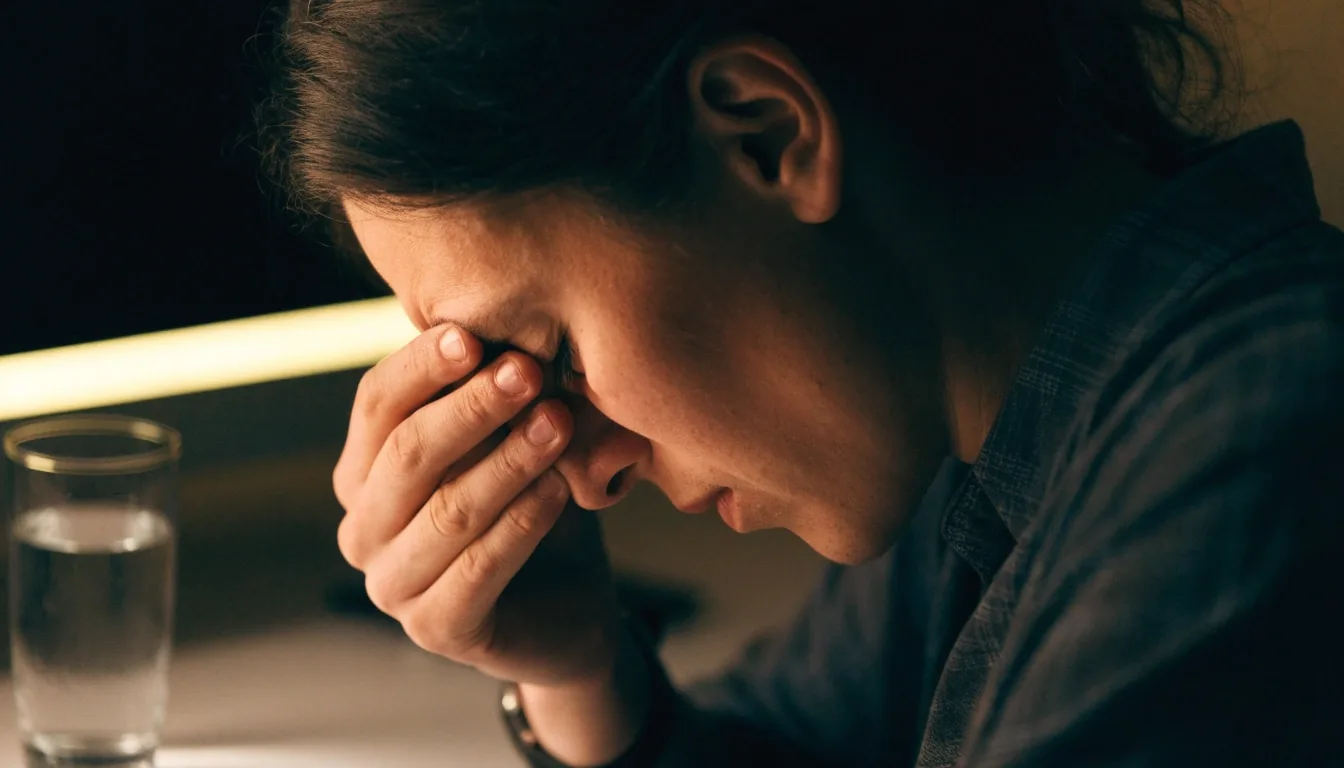
Digital eye strain arrives as a set of small complaints, not one clear sign. This page puts the full set into three groups, then marks the signs that usually point somewhere other than your screen.
Most readers carry a mix of all three groups from the same afternoon of work.
Symptoms of computer vision syndrome fall into three rough categories, and knowing which one you are in shapes what to do next. Most readers have a mix: someone with dry eyes at 4 p.m. often also has a headache and a stiff neck by 6 p.m., because the same long session drives all of it at once.
Dryness, burning, redness, a gritty sensation, watery eyes that appear even though the eye feels dry. These affect the front of the eye and are the most common reason people start searching.
Blurred vision, difficulty focusing, slow focus switching, occasional double vision. These follow long near work without breaks.
Headaches, neck pain, shoulder tension, back discomfort. Same desk setup, different part of the body answering for it.
These are the symptoms you feel on the eye itself. Dryness that gets worse through the day. Burning or stinging that sharpens in an air-conditioned room. Redness along the edges of the eye. A gritty sensation, as if something is caught there. Watery eyes that appear despite the dryness, and mild light sensitivity when glare sits on the screen.
Burning and watery eyes deserve their own explanation, because the pair confuses people: the eye can water precisely because it is dry. We cover the mechanism on its own page.
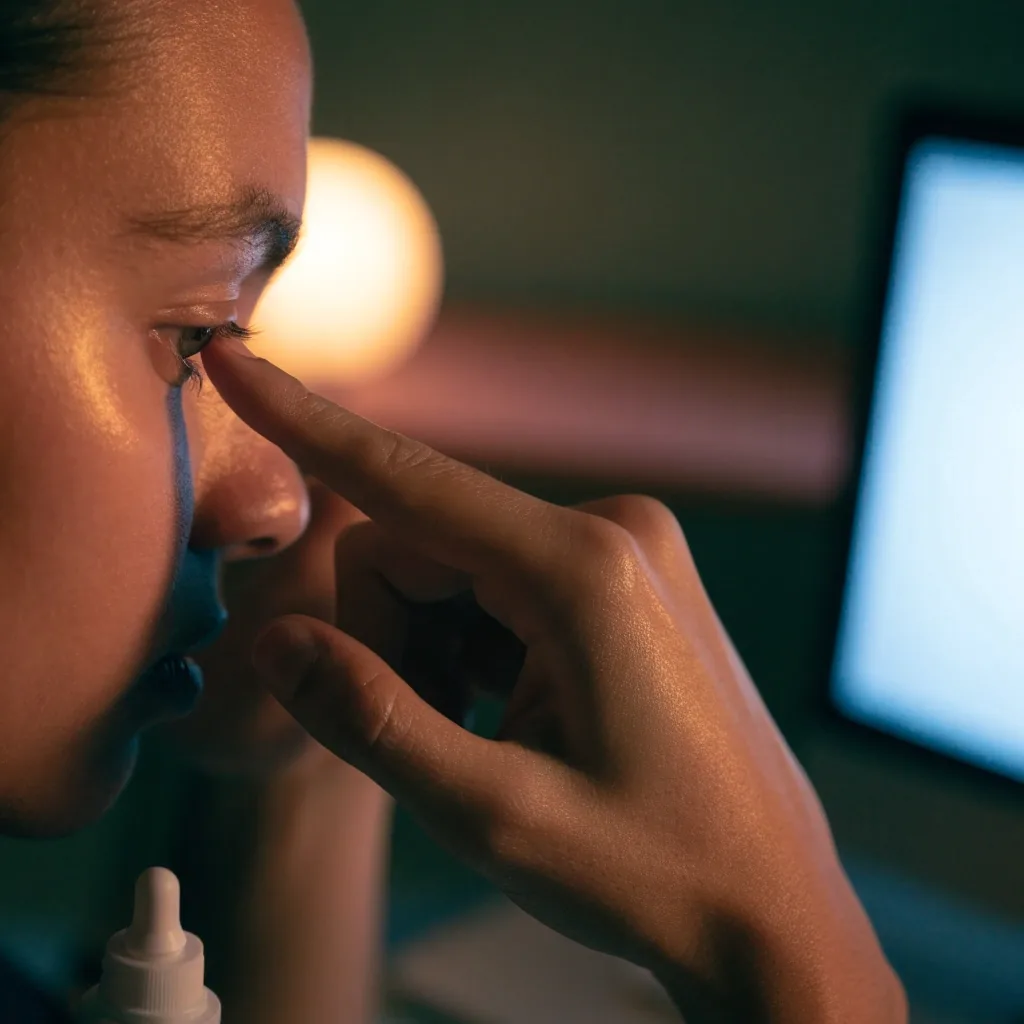
Visual symptoms are the ones that make you stop and check whether something is wrong. Blurred vision is the most reported. It often appears late in a long screen session and clears when you look away. Difficulty focusing shows up as a lag: you look from the monitor to the window and your eyes take a beat to catch up.
Double vision is less common and more concerning. If it does not resolve with rest, it is worth an appointment rather than a habit change. These symptoms tend to follow long near work without breaks, which is why the fix is usually structural, about how you schedule screen time, rather than optical.
Comes late in a session and clears when you look across the room. If it stays blurred at rest, that is a different conversation.
Your eyes take a beat to catch up when the distance of the subject changes — from monitor to window, or phone to door.
The one visual symptom that deserves more care. If it fades with rest it may belong to strain; if it returns every time you read, treat it as a reason to book an eye exam. We say more about the boundary in the section on symptoms that are not screen strain.

The non-eye symptoms are easy to overlook because they do not feel like eye problems. Headaches that start behind the eyes or at the temples after a monitor day are a common pattern. Neck pain and shoulder tension usually trace back to posture: a screen set too low pulls the head forward, a screen set too high pushes the chin up.
Medical guidance groups neck pain with shoulder and back pain in screen-related strain, a useful reminder that the eyes and the body are dealing with the same setup. Change the screen height and both ends of the problem move.
The clustering is not random. Three mechanisms run from the same session, and each one produces its own set of complaints. Reduce one and the others usually ease too, which is why treating a single symptom rarely feels like enough.
Blinking rate drops when you stare at a screen. The tear film stops refreshing, and the eye reports dryness, burning and — confusingly — watering.
The focusing muscles stay contracted for hours at a time. Releasing that contraction is what you feel as blurred vision and slow focus switching.
Chin forward and shoulders rounded loads the neck for as long as the screen is on. The headache and the shoulder tension follow from that load.
Not every symptom belongs here, and it matters to say so. This site can describe common patterns. It cannot tell you which pattern you have. If a symptom is severe, sudden, or one-sided, that is an appointment, not an article.
If any line above matches what you are feeling, use the contact page to reach the Future Sight Guide desk and we will tell you what to bring to an appointment. We do not diagnose here.
Some conditions amplify everything above, and it is worth checking your own setup against them. None of these are exotic. Most readers can change at least two of them this week.
Stop the near work you are in the middle of.
Long enough for the blink and the tear film to reset.
Roughly the far wall of the room, not the next desk.
The routine matters because it interrupts all three mechanisms at once: the blink resumes, the focusing muscle releases, and the head comes off the forward tuck. It is the easiest change to test on your own this week.
If you do book an eye exam, the description matters as much as the exam itself. A vague report sends the visit down the wrong path. A specific one points at the mechanism in a few sentences.
"My eyes burn and water by 4 p.m. on workdays and clear up after a walk" is more useful than "my eyes hurt." If the clinician uses a term you do not recognise, the asthenopia page explains the clinical word for eyestrain.
Patterns we hear from people comparing their own symptoms before they decide whether to change a habit or make an appointment.
Yes. Watering is often a response to dryness rather than its opposite. When the surface dries out, the eye produces tears that do not sit properly on the disturbed tear film, so they spill instead of coating. That is why burning and watery eyes usually show up together, and why treating only the watering rarely works. The burning and watery eyes page walks through the pairing.
It varies by symptom. Blurred vision often clears within seconds to a minute of looking into the distance. Dryness and burning can take longer, because the tear film needs time and a full blink pattern to rebuild. Headache and neck tension usually ease over minutes once you change position. If a symptom is still there an hour later and it has never behaved that way before, that is the point to consider an appointment rather than another break.
Not exactly. Paper reading still involves near focus, so it can tire the eyes. Screens add two things on top: people blink less when reading a screen, and screen brightness or glare can create a mismatch the eye has to work against. That is why a heavy screen day tends to produce symptoms that a day of the same number of hours on paper does not.
If the symptoms are mild, arrive late in the day, and clear with rest, the habit changes are a fair first test — most readers can run the 20-20-20 routine and check screen height this week. If a symptom is severe, sudden, one-sided, or matches one of the lines in the section above on symptoms that usually are not screen strain, an appointment comes before any habit change. An exam also makes sense if you have never had one or if your prescription may have drifted without you noticing.
No, and it should not try. It groups the symptoms, explains the common patterns, and flags where the pattern usually points elsewhere. A diagnosis needs an examination, and that is a job for a clinician — we say that in the About page too.
Each symptom group has its own page with more detail, and the habit routine is where most readers start. If you are still unsure whether your symptoms belong here at all, the About page explains what this guide can and cannot do.
Jl. Jenderal Sudirman No. 52, Jakarta 12190, Indonesia
Monday to Friday, 9:00 AM – 6:00 PM