
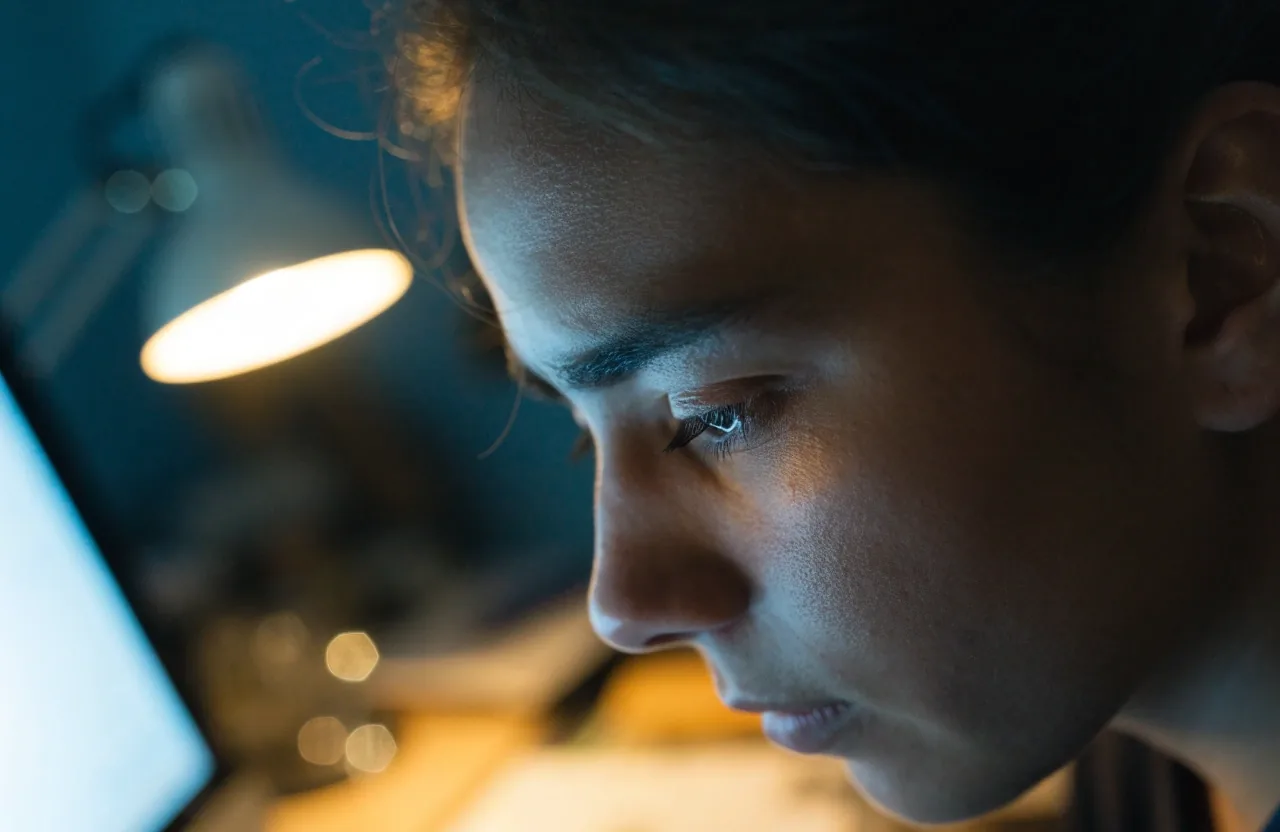
Why screens cause burning and watery eyes
Burning eyes that also water look like a contradiction. In most screen-related cases they are two readings from the same instrument: a tear film that breaks up too fast. This page explains the mechanism and the everyday measures worth trying.
The paradox at the centre of this symptom
The eye needs a stable tear film to feel comfortable. That film has layers, and when the outermost layer breaks up too quickly, the surface underneath is exposed. The eye registers that exposure as irritation and responds by producing reflex tears.
Those reflex tears are watery but not well-structured, so they do not coat the surface the way a healthy tear film does. The result is an eye that feels dry and scratchy while also running. It is not contradictory, and it is not a sign that the eye is fine.
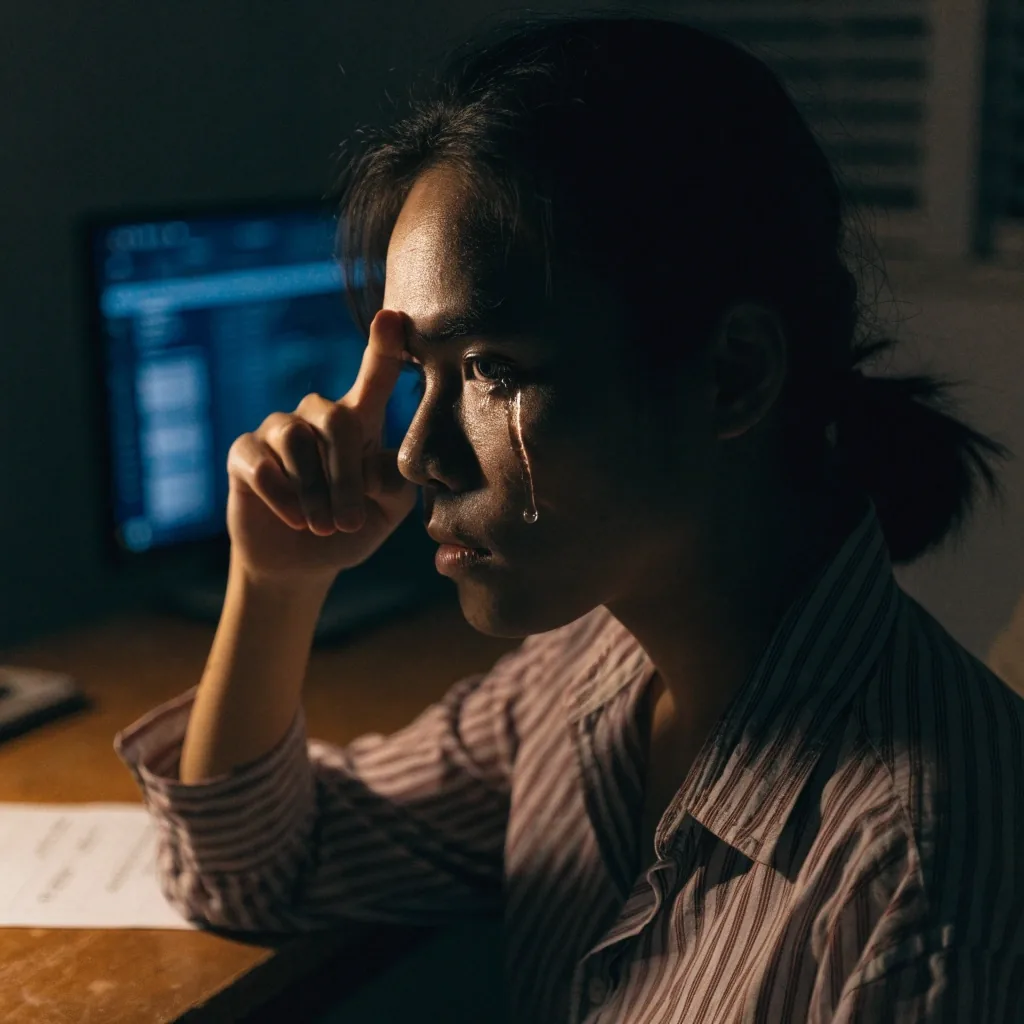
Why screen use triggers both at once
Blinking is the maintenance mechanism for the tear film, and screen use reduces blink rate. People also tend to blink incompletely when reading on a screen, so the upper and lower lids do not fully meet. That combination leaves the surface drier between blinks.
Add air conditioning, standard in most Indonesian offices, and a monitor mounted so you look slightly upward, and the dryness compounds. Burning tends to follow. Watering follows the burning. If you want the wider picture first, the symptom overview places this alongside the other common complaints.
-
Fewer blinks per minute
Concentration on a screen quietly drops how often the lids sweep the surface, so the film has fewer chances to reset.
-
Incomplete blinks
Reading long passages keeps the lids from meeting fully, leaving strips of the surface uncovered between sweeps.
-
Dry office air
Air conditioning pulls moisture out of the room and off the eye, so what is left evaporates sooner.
-
Screen above eye level
Looking slightly upward exposes more of the eye surface, which gives the same dryness more room to work.
What burning actually feels like
Burning is described differently by different people, which matters if you are trying to work out whether you have it. Common descriptions include a stinging or hot sensation, a feeling like the eye is irritated by air, or a rawness that builds through the afternoon.
Some readers notice it only in one eye, often the one closer to a vent or window. It frequently travels with redness and a gritty sensation, and it is usually worse by late afternoon than at the start of the day.
If the burning is one-sided, persistent, or comes with discharge, that is a different pattern and belongs with an eye care professional rather than a habit tweak.

When watery eyes is the bigger complaint
For some readers, the watering is more disruptive than the dryness. Driving with watery eyes is uncomfortable and unsafe. Reading a screen through tears is worse than reading through dryness.
Watering is included in digital eye strain symptom lists precisely because it is common, not because it is a minor footnote. It often arrives with burning or a gritty sensation rather than on its own.
One useful distinction: if your eyes water heavily in the morning before any screen use, or water outdoors in wind and cold, the cause may not be screen-related at all. Screen-linked watering tends to build through the working day and ease once you step away from the desk.
Lubricating eye drops: what they do and don't do
Preservative-free lubricating drops are a common supportive measure when dryness is present, and they are especially relevant for contact lens wearers. They add moisture and can reduce the burning and irritation short term.
What they do not do is fix the underlying causes: reduced blinking, long near focus, glare, or a screen position that exposes the eye surface. Drops are a comfort aid, not a solution to workload or posture.
One practical note worth remembering: if you are reaching for them many times a day and the symptoms are not improving, that pattern is information worth bringing to an appointment. It suggests the habit side of the problem is still unaddressed.
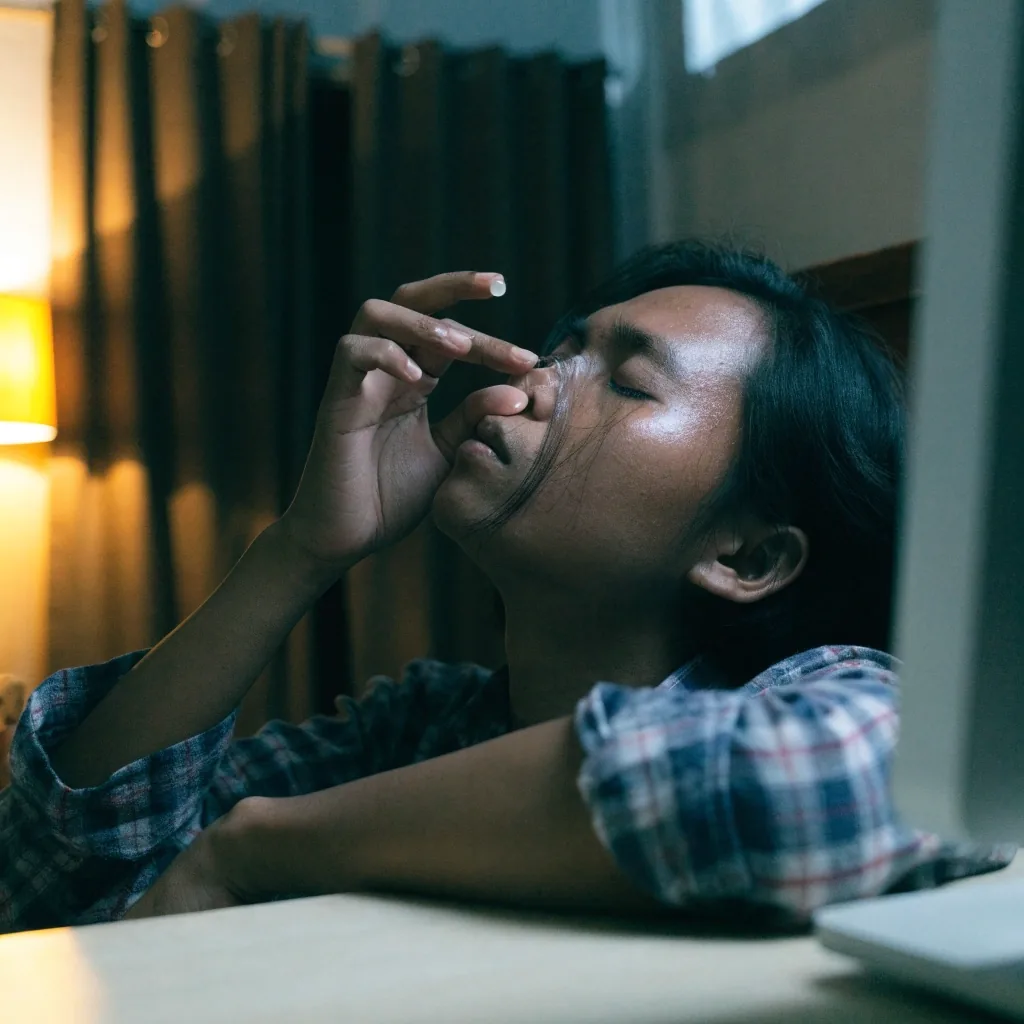
- Short-term relief of burning and irritation when dryness is present
- A practical option for contact lens wearers during screen work
- Not a fix for blink rate, near focus, glare or screen height
Everyday measures worth trying first
Before assuming you need anything more than a habit change, run through these practical adjustments. None of them are dramatic. The point is that they address the causes rather than the sensation.
-
Break rhythmDistance restores blinking
Take a 20-second break every 20 minutes
Look at a distant point rather than across the desk. This restores blinking and lets the tear film recover before the next stretch of work.
-
Blink qualityLids fully meeting
Blink fully during long reading
Make a conscious effort to close the lids completely, especially when you are reading a long passage or a document on screen.
-
Screen heightLess surface exposed
Drop the screen slightly below eye level
A monitor you look down at exposes less of the eye surface than one you look up at, which slows the drying between blinks.
-
AirflowDirect stream relocated
Move away from vents and glare
Reposition the desk away from direct air conditioning or a window that throws glare onto the screen. Both dry the eye faster than the work itself.
-
Room moistureSlower evaporation
Add moisture to very dry office air
A humidifier, or even a bowl of water near the desk, raises the humidity enough that tears evaporate more slowly through the afternoon.
The one rule that keeps the rest working
The 20-20-20 rule is the simplest version of the habit change: every 20 minutes, look at something about 20 feet away for 20 seconds. The distances are what make it work rather than feeling useful. Looking at the far wall of the same room does not give the focusing muscles the same release.
20 min
20 ft
20 sec
When burning and watering need an eye doctor
Most screen-related burning and watering eases with breaks and lubrication measures. Some patterns do not, and those are the ones to take seriously. Self-treating past that point delays the right answer.
- Burning is severe, or only one eye is affected
- There is discharge, or the eye is painful rather than uncomfortable
- Watering is heavy enough to keep blurring your vision
- Symptoms continue after several days of reduced screen time
Questions about what you are noticing on screen go to the same desk as everything else at Future Sight Guide, Monday to Friday, 9:00 AM – 6:00 PM.
Questions readers send about this symptom
If your question is not here, the symptoms overview and the screen habits guide cover the neighbouring ground in the same level of detail.
Can an eye be dry and watery at the same time?
Yes. The eye produces reflex tears in response to irritation, but those tears are thin and do not rebuild the layer that keeps the surface comfortable. The eye is genuinely dry underneath, and genuinely running on top.
Do lubricating drops replace a blinking habit?
No. They add moisture and ease the sensation for a while, but they do not change how often you blink, how close you sit to the screen, or how dry the room is. Those are the causes, which is why the habit measures come first.
Why is the burning worse in one eye?
Often the eye nearest a vent or a window sits in drier air than the other one. That explains mild asymmetry, but persistent one-sided burning still deserves a clinical look rather than a gradual habit adjustment.
How long before habit changes make a difference?
Some readers notice a calmer afternoon within the first few days, because every break and every full blink gives the tear film a chance to reset. If nothing changes after several days of reduced screen time, that is the point to book an appointment.
Keep reading where this fits
Burning and watery eyes rarely arrive alone. The pages below cover the symptoms that most often sit beside it, and the daily routine that keeps them from building through the week.
Future Sight Guide is an educational resource about digital eye strain for readers in Indonesia. This page describes common screen-related patterns; it does not diagnose or replace an eye examination. Address: Jl. Jenderal Sudirman No. 52, Jakarta 12190, Indonesia. Monday to Friday, 9:00 AM – 6:00 PM.